Biography

Bligh's second expedition was authorised by the admiralty in March, 1791, and the commander was consulted as to "what sort of vessel may be best adapted to the object in view." The Providence, a 28-gun ship, was chosen, with the brig Assistant as a tender. The latter was placed in charge of Lieutenant Nathaniel Portlock. Flinders, eager for sea experience, joined the Providence as a midshipman on May 8th, and thus had the advantage of being under the immediate direction of her captain.

Governor King received the news of the wreck of the Porpoise immediately after the arrival of the Hope in Port Jackson, on the evening of September 8th. King and his family were at dinner when to his great amazement Flinders was announced.

When Bligh's expedition returned, Europe was staggering under the shock of the French Revolution. The head of Louis XVI was severed in January; the knife of Charlotte Corday was plunged into the heart of Marat in July; Marie Antoinette, the grey discrowned Queen of thirty-eight, mounted the scaffold in October. The guillotine was very busy, and France was frantic amid internal disruption and the menace of a ring of foes.

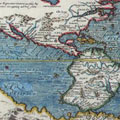
In order that the importance of the work done by Flinders may be adequately appreciated, it is necessary to understand the state of information concerning Australian geography before the time of his discoveries. Not only did he complete the main outlines of the map of the continent, but he filled in many details in parts that had been traversed by his predecessors.

Charles Mathieu Isidore Decaen was born at Caen, the ancient and picturesque capital of Normandy, on April 13th, 1769. Left an orphan at the age of twelve, his education was superintended by a friend of his father, who had been a public official. At the end of his schooldays he studied law under an advocate of local celebrity, M. Lasseret.

Apart from Admiral Pasley, two officers who participated in Lord Howe's victory on "the glorious First of June," had an important influence upon the later career of Flinders. The first of these, Captain John Hunter, had served on the flagship Queen Charlotte. The second, Henry Waterhouse, had been fifth lieutenant on the Bellerophon. Flinders was under the orders of both of them on his next voyage.

At four o'clock in the afternoon of December 17th the Cumberland entered Port Louis, where Flinders learnt that Le Geographe had sailed for France on the previous day. As soon as he could land he went ashore to present himself to the Governor, whom he found to be at dinner.

The patching up of the Reliance not being surgeon's work, Bass, throbbing with energy, looked about him for some useful employment. The whole of the New South Wales settlement at this time consisted of an oblong - the town of Sydney itself - on the south side of Port Jackson, a few sprawling paddocks on either side of the fang-like limbs of the harbour, some small pieces of cultivated land further west, at and beyond Parramatta, and a cultivable area to the north-west on the banks of the Hawkesbury River.

We shall now see how a detention which had been designed as a sharp punishment of an officer who had not comported himself with perfect respect, and which Decaen never intended to be prolonged beyond about twelve months, dragged itself into years, and came to bear an aspect of obstinate malignity.

During the absence of Bass in the whaleboat, the repairing of the Reliance was finished, and in February, 1798, Flinders was able to carry out a bit of exploration on his own account. The making of charts was employment for which he had equipped himself by study and practice, and he was glad to secure an opportunity of applying his abilities in a field where there was original work to do.

Syndicate content