


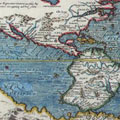


After reporting himself to the Admiralty on his arrival in England, Cook proceeded to his home at Mile End Old Town, where he was for some time employed in completing his Charts and Journals, and on 14th August, the Annual Register announces, he was introduced to His Majesty at St. James's, when he:
"presented his Journal of his Voyage, with some curious maps and charts of different places that he had drawn during the voyage; he was presented with a captain's commission."
He also found time to write two long and instructive letters to his old master and good friend, Mr. John Walker of Whitby, which are to be found in Dr. Young's work. They give a rapid glance at the different places visited, with a few pithy remarks as to their peoples and productions; mention the pleasing reception he had from the king, and he alludes to the probability of being despatched on a second voyage with two ships.
Edgeworth, in his Memoirs, states that about this time Cook was a frequent visitor at Denham Place, the home of Mr. Louis Way, F.R.S., but as that gentleman died in this year, and Edgeworth also refers to events of a later date as occurring at the same time, it is more probable that these visits were paid after the Second Voyage to Mr. Benjamin Way, also F.R.S., and a Director of the South Sea Company. In another place Edgeworth infers that Banks, Solander, and Cook were members of a club which met at Slaughter's Coffee House in 1765. Of course, this is an error, for Cook was then engaged in Newfoundland, and unknown to the Royal Society, whose members composed the club spoken of; in fact, Cook, though a frequent guest in after times, was never a member of the Royal Societies Club.
Fanny Burney (Madame d'Arblay) says that in September her father, Dr. Charles Burney, spent a few days at Hinchinbroke, Lord Sandwich's place, in order to meet Cook, Banks, and Solander, and it is evident that the second voyage had been resolved on, for Dr. Burney's son, James, was introduced to Cook by Lord Sandwich, with a view to going on the expedition. Shortly after this, Sandwich met Dr. Burney at Lord Oxford's, Houghton, and asked him if he could recommend any one capable of writing the history of the voyage of the Endeavour; he gave Dr. Hawkesworth's name, and was requested to introduce him to Lord Sandwich on his return to town.
The object of the Second Voyage was, to use Cook's own words:
"To put an end to all diversity of opinion about a matter so curious and important, was His Majesty's principal motive in directing this voyage to be undertaken, the history of which is now submitted to the public, i.e., the existence of another continent in the South."
The discussion on the subject had been resumed with renewed vigour after the return of the Endeavour, and Dalrymple led one party, who held that Cook had not set the matter at rest as he had left far too much space untraversed.
WHITBY SHIPS AGAIN.
The two ships that were to be employed were probably selected in the Thames by Cook himself, and, like the good ship Endeavour, were built by Fishburn of Whitby, and purchased from Captain W. Hammond of Hull. The reasoning which guided Cook in his selection is thus laid down by him in his introduction to the account of the Second Voyage:
"The success of such undertakings as making discoveries in distant parts of the world, will principally depend on the preparations being well adapted to what ought to be the first consideration, namely, the preservation of the adventurers and ships; and this will chiefly depend on the kind, the size, and the properties of the ships chosen for the service. These primary considerations will not admit of any other, that may interfere with the necessary properties of the ships. Therefore, in chusing the ships, should any of the most advantageous properties be wanting, and the necessary room in them be, in any degree, diminished for less important purposes, such a step would be laying a foundation for rendering the undertaking abortive in the first instance. The ship must not be of great draught, but of sufficient capacity to carry a proper quantity of provisions and stores for the crew, and of such construction that she will bear to take the ground, and of such a size that she can be conveniently laid on shore if necessary for repairing any damages or defects, and these qualities are to be found in North Country built ships, such as are built for the coal trade, and in none other."
The larger of the two chosen was 462 tons, purchased for 4,151 pounds, and received into the Royal Navy under the name of the Drake. She was fitted as a sloop at Deptford, at a cost of 6,568 pounds (this sum, probably, covering both the original alterations which proved unsatisfactory and those made immediately before sailing), and at the time of her purchase was about fourteen months old. The second ship was of 336 tons, also fitted at Deptford as a sloop, was eighteen months old at time of purchase, cost 2,103 pounds, and was received under the name of Raleigh.
The complement of the Raleigh was eighty, but two additional carpenters' mates were added to each ship later on. Cook was also instructed not to bear, as was then usual, any servants on the books, but to enter A.B.s instead, and each officer who was entitled to a servant was "to be paid an allowance by Bill equal to the wages of the number of servants respectively allowed them."
On 25th December the names of the two ships were changed, the Drake becoming the Resolution, and the Raleigh the Adventure. The lieutenants appointed to the Resolution were Robert Pallisser Cooper, Charles Clerke, and Richard Pickersgill, and Mr. Tobias Furneaux, Commander, and Joseph Shank first lieutenant, of the Adventure. Of these officers Cook writes:
"I had all the reason in the World to be perfectly satisfied with the choice of the officers. The Second and Third Lieutenants, the Lieutenant of Marines, two of the Warrant officers, and several of the Petty officers had been with me during the former voyage. The others were men of known abilities, and all of them on every occasion showed their zeal for the service in which they were employed during the whole voyage."
ALTERATIONS TO THE RESOLUTION.
Two days after receiving his orders, Cook hoisted his pendant and superintended the alterations that were to be made for the accommodation of Mr. Banks and his party of scientists. These comprised Dr. Solander, Zoffani, the portrait painter, Dr. Lynd of Edinburgh, to secure whose services Parliament had made a special grant of 4000 pounds (though "what discoveries they expected him to make I could not understand," says Cook), and nine others, draughtsmen and servants; at least three more than had been thought necessary when the vessel was purchased. These alterations were:
"to raise her upper works about a foot, to lay a spar deck upon her from the quarter-deck to the forecastle (she having at this time a low waist), and to build a round house or coach for my accommodation, so that the great cabin might be appropriated to the use of Mr. Banks alone."
The Comptroller of the Navy, Captain Pallisser, was strongly opposed to these alterations as likely to be detrimental to the ship's sailing qualities, and though his opinions were overborne, they in the end proved to be correct.
When he had seen the alterations fairly on the way, Cook applied for three weeks' leave of absence, on the plea that he had "some business to transact in Yorkshire, as well as to see an aged father," and his application was at once granted. He therefore went to Ayton, where for the first time for seventeen years he was again amongst his own people. From Ayton he went on to Whitby, and was met some miles out from that town by many of the leading men of the place. From the Walkers he received the heartiest of welcomes, and it is related that the old housekeeper, Mary Prowd, had been carefully instructed that a Commander in His Majesty's Navy was a very different person from one of her master's apprentices, and must be received with all the marks of respect due to his rank. She promised obedience, but, alas, when the time came her memory fled, and opening wide her arms, she exclaimed: "O honey James! How glad I is to see thee!" A welcome, probably, more dear to Cook than any other could have been, and a proof of the affectionate regard he could inspire.
In February he was back in London, and Dr. Burney says in his Memoirs:
"I had the honour of receiving the illustrious Captain Cook to dine with me in Queen's Square [Bloomsbury] previously to his second voyage round the world. Observing upon a table, Bougainville's Voyage Autour du Monde, he turned it over, and made some curious remarks on the illiberal conduct of that circumnavigator towards himself when they met and crossed each other; which made me desirous to know, in examining the chart of M. de Bougainville, the several tracks of the two navigators, and exactly where they had crossed or approached each other.
"Captain Cook instantly took a pencil from his pocket book and said he would trace the route; which he did in so clear and scientific a manner that I would not take fifty pounds for my book. The pencil marks, having been fixed by skim milk, will always be visible."
This volume is now in the British Museum, and the pencil marks on the chart are as distinct as on the day they were made.
The alterations to the ship were completed early in February, and on the 6th she was hauled out of dock, and rigging, ballasting, and storing commenced. Cook says:
"Every department seemed to vie with the other in equiping these two ships, every standing rule and order in the Navy was dispensed with, every alteration, every necessary and useful article, was granted as soon as asked for."
SUPPLIES INCREASED.
In another passage he again refers to the anxiety of the Navy Board to see that the quality of the stores was everything that could be wished, and the quantity was increased from one to two and a half years' supply.
On the 22nd April the two sloops were at Longreach to take in their guns and gunners' stores; twelve carriage guns and twelve swivel musketoons for the Resolution, and ten carriage guns and ten swivels for the Adventure. These should have been taken on board at Galleon's Reach, but the Resolution was drawing too much water - seventeen feet. When here Cook showed that he thought she was rather over-weighted with her new upper works, and might prove crank, but:
"as the Gentlemen's apartments were full of heavy baggage and the sloop a good deal lumbered aloft with heavy and some useless articles, which we might soon get rid of or get into the hold after we had consumed some of our provisions, I still entertained hopes that she would bear all her additional works, and suspended giving any other opinion until a full trial had been made of her, foreseeing what would be the consequence in case she did not answer in the manner she was now fitted."
On 29th April, Mr. Banks gave an entertainment on board to Lord Sandwich, the French Ambassador, and other distinguished personages, and Cook notes that the first named had been on board several times, "a laudable tho ' rare thing in a First Lord of the Admiralty."
Cook obtained a few days' leave to make his final arrangements, and the Resolution was ordered to the Downs under the first lieutenant, whilst the Adventure proceeded to Plymouth; both vessels sailing from Longreach on 10th May. The Resolution, contending against adverse winds, made a very slow trip down to the Nore, being four days on the journey, and Mr. Cooper reported to Cook that she was very crank. The latter at once wrote to the Admiralty that he considered it unsafe to proceed any further with her in that condition, and proposed that her poop should be cut down, her masts shortened, and her guns exchanged to four-pounders. The Navy Board, however, decided that she should be restored to her original state as far as it was possible to do so; she was therefore ordered to Sheerness, and her Captain was instructed to join his ship and see the alterations were properly carried out.
Before leaving London Cook, who had heard it was said that he was not satisfied with the vessels chosen for the voyage, wrote to Mr. Stephens on the subject, giving his opinion that the crankness of the Resolution "was owing to the additional works that have been built upon her in order to make large accommodation for the several gentlemen passengers intended to embark in her." He added that the proposed alterations of the Navy Board would "render her as fit to perform the voyage as any ship whatever"; and, referring to the report that he did not approve of the type of ship, he says, "from the knowledge and experience I have had of these sort of vessels, I shall always be of opinion that only such are proper to be sent on Discoveries to very distant parts." On the 21st he again wrote Stephens that the alterations were making satisfactory progress, and that a man had been in the yard who had known the ship before her purchase, and he had "with some warmth asserted that at that time she was not only a stiff ship, but had as many good qualities as any ship ever built in Whitby." In reply to a rumour that the men were afraid to sail in her, he points out that she is moored alongside a wharf, and the men could go ashore whenever they pleased, yet he had not lost a single man.
BANKS WITHDRAWS.
Mr. Banks did not approve of the reduction in his accommodation necessitated by these alterations, and tried to get a 40-gun ship in place of the Resolution, and he and his friends succeeded in raising a very acrimonious discussion on the subject; but the admiralty stood firm, and the alterations went on under the superintendence of Cook. On 24th May Banks and Solander went to inspect her, and on their return to town Banks wrote to the Admiralty that he should not go the voyage as "the ship was neither roomy nor convenient enough for my purpose, nor no ways proper for the voyage." Cook, who says the preparations had cost Banks "about five Thousand Pounds," does not think that the reasons given by Banks were the only ones he had for not taking part in the voyage, and then continues, "their baggage, etc., were got out of the sloop and sent to London, after which no more complaints were heard of want of room, etc."
Lieutenant Clerke, who was very friendly with Banks, wrote to him on 31st May:
"Indeed I am sorry I'm not to have the honour of attending you the other bout...They are going to stow the major part of the cables in the hold to make room for the people now. I asked Gilbert [the Master], if such was the present case, what the devil should we have done if we had all gone? 'Oh, by God, that was impossible,' was his answer."
Marra (the gunner's mate), in a Journal of the voyage, published by Newberry, 1775, says the success of the voyage was due to their having shaken off:
"the train of gentlemen, who with their attendants occupied the chief accommodations of the ship," and whose presence would have rendered it "out of the power of the most determined officer to have carried such a princely retinue through the icy regions which they were to pass, without murmurs, or perhaps mutiny."
Some of the newspapers tried to make political matter out of the affair, and one at any rate roundly declared that "the true reason" of Banks's withdrawal was on account of a remonstrance from the Spanish Ambassador against any further exploration of the South Seas.
The withdrawal of Banks made no difference to his friendship with Cook, and in the future he was always ready to afford his support whenever it could be of any service either to his friend or family.
JOHN REINHOLD FORSTER.
As soon as it was known that Mr. Banks had withdrawn, Mr. John Reinhold Forster, a German of some scientific reputation, applied for the position of naturalist for the voyage, and, through the interest of Lord Sandwich, was successful. He was to receive the 4000 pounds granted by Parliament for Dr. Lynd, and was to pay all expenses, except ship's allowance of food, and provide all necessary instruments. He was accompanied by his son as assistant, a youth of about twenty years, who afterwards attained some note by his writings and translations. Messrs. Wales and Bayley were appointed astronomers by the Board of Longitude, with instructions to take and compare observations at every possible opportunity, and to take under their special charge the timepieces which were being carried on the two ships for the purpose of testing their accuracy and capabilities in assisting in ascertaining the longitude. Two of these instruments, made by Arnold, were placed in Mr. Bayley's charge on the Adventure, and two, one by Arnold, and the other by Kendal on Harrison's principle, under the care of Mr. Wales on the Resolution. Great precautions were taken to prevent any accident or tampering with these instruments; they were kept in boxes having three locks, the keys were held one by the Captain, one by the first lieutenant, and the third by the astronomer, so they could not even be wound up except in the presence of all three. William Hodges, a painter of repute, was appointed as artist, and his pictures were to become the property of the Admiralty.
The celebrated Dr. Joseph Priestley, at that time minister at Mill Hill Chapel, Leeds, had been invited by Mr. Banks to accompany him as astronomer, and his congregation had undertaken to guarantee his position on his return; but the Board of Longitude took objection to his religious views, and so his application was withdrawn.