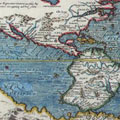
North America

On Sunday morning, August 20th, I awoke in a state of expectancy. We had slept three times since leaving the Montagnais camp, and unless the Barren Grounds People were not now in their accustomed camping place, we ought to see them before night. Many thoughts came of how greatly Mr. Hubbard had wished to see them, and what a privilege he would have thought it to be able to visit them.

This book is the result of a determination on my part to complete Mr. Hubbard's unfinished work, and having done this to set before the public a plain statement, not only of my own journey, but of his as well. For this reason I have included the greater part of Mr. Hubbard's diary, which he kept during the trip, and which it will be seen is published exactly as he wrote it, and also George Elson's account of the last few days together, and his own subsequent efforts.

There was an unusual excitement and interest in Mr. Hubbard's face when he came home one evening in January of 1903.

We had just seated ourselves at the dinner-table, when leaning forward he handed me a letter to read. It contained the very pleasing information that we were shortly to receive a, for us, rather large sum of money. It was good news, but it did not quite account for Mr. Hubbard's present state of mind, and I looked up enquiringly.

"You see, Wife, it means that I can take my Labrador trip whether anyone sends me or not," he said triumphantly.

The Detective Corps of New York consists of twenty-five men, in change of Captain Young. They are men of experience, intelligence, and energy. They are well skilled in the art of ferreting out crimes, and generally succeed in the objects which engage their attention. They have a distinct organization from the Metropolitan Police, though they are subject to the orders of the Commissioners.

There are over one hundred houses of assignation in New York, known to the police. Besides these, there are places, used as such, which the officials of the law do not and cannot embrace in the general term. These are cheap hotels, where women hire rooms without meals, and receive visitors, with whom they make appointments on the streets, or in the places of amusement. Some really good houses have been ruined in this way.

There are three thousand lawyers practicing at the New York bar. A few of these have large incomes, two or three making as much as fifty thousand dollars per annum; but the average income of the majority is limited. An income of ten or fifteen thousand dollars is considered large in the profession, and the number of those earning such a sum is small.

Strangers visiting the Church of the Ascension, in New York, cannot fail to notice the presence of an old gentleman, who occupies an arm-chair immediately in front of the chancel, in the middle aisle, and who gives the responses to the service in a very loud and distinct manner. This is, perhaps, the oldest man of the entire million of New York city inhabitants. It is Captain Lahrbush, formerly of the British army, but for the last twenty years a New York resident. He was born in London, on the 9th of March, 1765.

A Work Descriptive of the Virtues and the Vices, the Mysteries, Miseries and Crimes of New York City

by Edward Winslow Martin


Leave Broadway opposite the New York Hospital, and pass down Pearl street in an easterly direction. Five minutes walking will bring you to the abode of poverty and suffering, a locality which contrasts strangely with the elegant thoroughfare we have just left. Cross Centre street, and continue your eastward course, and a few minutes will bring you to Park street.

Syndicate content