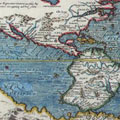
North America

There are times when that which constitutes one's inner self seems to cease. So it was with me at the moment Mr. Ford uttered those last words. My heart should have swelled with emotion, but it did not. I cannot remember any time in my life when I had less feeling.

It was on the 15th of July, 1903, that Leonidas Hubbard, Jr., my husband, with two companions, set out from Northwest River Post, near the head of Lake Melville, for a canoe trip into the interior of Labrador, which be hoped would not only afford him an interesting wilderness experience but also an opportunity to explore and map one, and perhaps both, of these rivers, the Northwest River draining Lake Michikamau to Lake Melville, and the George River draining the northern slope of the plateau to Ungava Bay.

KEPT DURING HIS EXPEDITION INTO LABRADOR

The call "All aboard," came at about six o'clock on Thursday morning. We had breakfast, and started at 8 A.M. A cold northwest wind was blowing, and an occasional light shower fell. The sand- hills on either side of the river grew higher as we went up, with always the willows along the water edge. Miles ahead we could see Mounts Sawyer and Elizabeth rising blue and fine above the other hills, and thus standing up from the desolation of the burnt lands all about; they came as a foreword of what was awaiting us further on.

As we have said before, the majority of the better classes of New York prefer to board rather than keep house. Of these, a large number board at the hotels, the rest in private boarding-houses.

There are seventy-five concert saloons in New York, which employ seven hundred and forty-seven waiter girls. The brothels usually termed dance-halls, are included in this estimate, but, as we design referring especially to them in another chapter, we shall pass them by, for the present, and devote this chapter to the concert saloons proper.

In passing the corner of Broadway and Houston street, you will see, to the east of the great thoroughfare, an immense red and blue lantern attached to a low, dingy frame building. This is the sign of Harry Hill's dance-house. It is one of the sights, and one of the saddest sights, too, of New York. As you approach the place from Broadway, you notice a narrow door at the side of the main entrance, opening upon a flight of stairs which lead to the dancing hall. This is the private entrance for women.

The sign of the three gilt balls is very common in the Great City, and where the ancient badge of the pawnbroker is not seen, the words "Exchange Office" answer the same purpose. The law recognizes the fact that in all large communities, these dealers are a necessary evil, and while tolerating them as such, endeavors to interpose a safeguard in behalf of the community, by requiring that none but persons of good character and integrity shall exercise the calling.

The City of New York has been regularly laid out and surveyed for a distance of twelve miles from the Battery. It has over two hundred miles of paved streets. Most of the streets in the old Dutch city are crooked and narrow, but above that they are broader, and better laid on; and after passing Fulton street, they become quite regular. Above Fourteenth street, the city is laid off in regular squares. First street is located about a mile and four fifths above the Battery. From this the cross streets extend to Two hundred and twenty-eighth street.

The City of New York is governed by a Mayor, a Board of Aldermen and a Board of Common Councilmen. The Mayor has been stripped by the Legislature of the State of almost every power or attribute of power, and is to-day merely an ornamental figure-head to the City government. The real power lies in the Boards named above, and in the various "Commissioners" appointed by the Legislature. These are the Commissioners in charge of the streets, the Croton Aqueduct, Public Charities and Corrections, the Police and Fire Departments.

Syndicate content