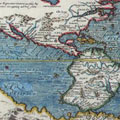
North America

The first snow that whitens the Sierra, usually falls about the end of October or early in November, to a depth of a few inches, after months of the most charming Indian summer weather imaginable. But in a few days, this light covering mostly melts from the slopes exposed to the sun and causes but little apprehension on the part of mountaineers who may be lingering among the high peaks at this time. The first general winter storm that yields snow that is to form a lasting portion of the season's supply, seldom breaks on the mountains before the end of November.

Early one bright morning in the middle of Indian summer, while the glacier meadows were still crisp with frost crystals, I set out from the foot of Mount Lyell, on my way down to Yosemite Valley, to replenish my exhausted store of bread and tea.

It was the sun that did it, or else it was a scheme on the part of George and Job to work in an extra pudding. However that may have been, we found ourselves on Wednesday morning not yet on Lake Michikamau, and we did not reach it until 5.15 P.M. that day.

We had not reached our haven too soon. Almost immediately the wind rose again, and by noon was blowing so strong that we could have done nothing in any part of Lake Michikamau, not to speak of crossing the upper end in a heavy south wind. Around the point I did not find things look as I expected. It was only a very shallow bay, and where we looked for the islands a long, narrow point of land stretched out from the west shore to the northeast.

Tuesday morning, August 8th, dawned clear and calm, and Gilbert came forth to light the fire, singing: "Glory, glory, hallelujah! as we go marching along." Yet before the tents were taken down the wind had sprung up from the southwest, and it was with difficulty that the canoes were launched and loaded.

The gale continued all night with passing showers, which threatened to riddle the tent with their force, and it was not till ten the following forenoon that we were able to proceed, hugging the shore as we went. Deer were about in all directions, and as we rounded a point near the head of the lake, George, standing in the bow of the canoe, and looking across to the woods beyond the big marsh, which stretched away northward, said: "The wood over there is just moving with them."

How little I had dreamed when setting out on my journey that it would prove beautiful and of such compelling interest as I had found it. I had not thought of interest - except that of getting the work done - nor of beauty. How could Labrador be beautiful? Weariness and hardship I had looked for, and weariness I had found often and anxiety, which was not yet past in spite of what had been achieved; but of hardship there had been none. Flies and mosquitoes made it uncomfortable sometimes but not to the extent of hardship.

An Account of the Exploration of the Nascaupee and George Rivers

The night was very still when I awoke, but it was cold. Frost sparkled in the moonlight on willows and low growth, and when at first sign of dawn I reached for my stockings and duffel to put them on, they were frozen stiff. I did not wait to hunt out dry ones, but slipped them on for I was too anxious to be on the march again. I meant to go on to Ungava now, no matter what befell; _perhaps_ we could yet be in time for the ship. She might be delayed.

This book is the result of a determination on my part to complete Mr. Hubbard's unfinished work, and having done this to set before the public a plain statement, not only of my own journey, but of his as well. For this reason I have included the greater part of Mr. Hubbard's diary, which he kept during the trip, and which it will be seen is published exactly as he wrote it, and also George Elson's account of the last few days together, and his own subsequent efforts.

Syndicate content