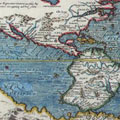
North America

Utah has just been blessed with one of the grandest storms I have ever beheld this side of the Sierra. The mountains are laden with fresh snow; wild streams are swelling and booming adown the canyons, and out in the valley of the Jordan a thousand rain-pools are gleaming in the sun.


California-Utah-Nevada-Washington-Oregon-The Grand Canyon

by John Muir


EDITOR'S NOTE

When the north wind blows, bathing in Salt Lake is a glorious baptism, for then it is all wildly awake with waves, blooming like a prairie in snowy crystal foam. Plunging confidently into the midst of the grand uproar you are hugged and welcomed, and swim without effort, rocking and heaving up and down, in delightful rhythm, while the winds sing in chorus and the cool, fragrant brine searches every fiber of your body; and at length you are tossed ashore with a glad Godspeed, braced and salted and clean as a saint.

Mount Shasta rises in solitary grandeur from the edge of a comparatively low and lightly sculptured lava plain near the northern extremity of the Sierra, and maintains a far more impressive and commanding individuality than any other mountain within the limits of California. Go where you may, within a radius of from fifty to a hundred miles or more, there stands before you the colossal cone of Shasta, clad in ice and snow, the one grand unmistakable landmark - the pole star of the landscape.

Lilies are rare in Utah; so also are their companions the ferns and orchids, chiefly on account of the fiery saltness of the soil and climate. You may walk the deserts of the Great Basin in the bloom time of the year, all the way across from the snowy Sierra to the snowy Wahsatch, and your eyes will be filled with many a gay malva, and poppy, and abronia, and cactus, but you may not see a single true lily, and only a very few liliaceous plants of any kind.

The first snow that whitens the Sierra, usually falls about the end of October or early in November, to a depth of a few inches, after months of the most charming Indian summer weather imaginable. But in a few days, this light covering mostly melts from the slopes exposed to the sun and causes but little apprehension on the part of mountaineers who may be lingering among the high peaks at this time. The first general winter storm that yields snow that is to form a lasting portion of the season's supply, seldom breaks on the mountains before the end of November.

Early one bright morning in the middle of Indian summer, while the glacier meadows were still crisp with frost crystals, I set out from the foot of Mount Lyell, on my way down to Yosemite Valley, to replenish my exhausted store of bread and tea.

The sustained grandeur of the High Sierra is strikingly illustrated by the great height of the passes. Between latitude 36 deg. 20' and 38 deg. the lowest pass, gap, gorge, or notch of any kind cutting across the axis of the range, as far as I have discovered, exceeds 9000 feet in height above the level of the sea; while the average height of all that are in use, either by Indians or whites, is perhaps not less than 11,000 feet, and not one of these is a carriage-pass.

Among the many unlooked-for treasures that are bound up and hidden away in the depths of Sierra solitudes, none more surely charm and surprise all kinds of travelers than the glacier lakes. The forests and the glaciers and the snowy fountains of the streams advertise their wealth in a more or less telling manner even in the distance, but nothing is seen of the lakes until we have climbed above them. All the upper branches of the rivers are fairly laden with lakes, like orchard trees with fruit.

After the lakes on the High Sierra come the glacier meadows. They are smooth, level, silky lawns, lying embedded in the upper forests, on the floors of the valleys, and along the broad backs of the main dividing ridges, at a height of about 8000 to 9500 feet above the sea.

Syndicate content