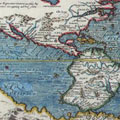
Africa

[NOTE - In the chapters on Moroccan history and art I have tried to set down a slight and superficial outline of a large and confused subject. In extenuation of this summary attempt I hasten to explain that its chief merit is its lack of originality.

I

M. H. Saladin, whose "Manual of Moslem Architecture" was published in 1907, ends his chapter on Morocco with the words: "It is especially urgent that we should know, and penetrate into, Morocco as soon as possible, in order to study its monuments. It is the only country but Persia where Moslem art actually survives; and the tradition handed down to the present day will doubtless clear up many things."

Afrique Francaise (L'). Bulletin Mensuel du Comite de l'Afrique Francaise. Paris, 21, rue Cassette.

Bernard, Augustin. Le Maroc. Paris, F. Alcan, 1916.

Budgett-Meakin. The Land of the Moors. London, 1902.

Chatelain, L. Recherches archeologiques au Maroc: Volubilis. (Published by the Military Command in Morocco).

  Les Fouilles de Volubilis (Extrait du Bulletin Archeologique, 
  1916)

Chevrillon, A. Crepuscule d'Islam.

Cochelet, Charles. Le Naufrage du Brick Sophie.

The moral result of the elephant hunt was very satisfactory, at the same time most unexpected.

Military critics will condemn my arrangements for an advance south.

My original plans had been well laid. A line of fortified posts was to have been established throughout the country at intervals of three days' march. This would have assured an open communication with Gondokoro.

Unfortunately, my force had been 350 men short of the number stipulated; and the 1,200 men that had once been reviewed at Gondokoro had been reduced to 500.

I determined upon a new plan. I knew the direction of Lobore, as I had been there during my former expedition; the distance could not exceed sixty miles.

If the soldiers could draw the carts, I might yet manage to advance, as I should be able to procure carriers on arrival at Lobore; provided always that the natives were as friendly as when I left them some years ago.

by Samuel White Baker


ON 6th March, 1872, we started from the bivouac at the base of the Shooa mountain at 6.10 A.M.

The troops were in excellent spirits, the air was fresh and cool in this elevated country, the horses had been well groomed, and the arms and accoutrements had been burnished on the previous afternoon, in order to make a good appearance before my old friends the natives of Fatiko and Shooa.

The bright scarlet uniforms and snow-white linen trousers of 212 men looked extremely gay upon the fresh green grass, which had lately sprung up throughout this beautiful park.

An interval of five years has elapsed since the termination of my engagement in the service of His Highness the Khedive of Egypt, "to suppress the slave-hunters of Central Africa, and to annex the countries constituting the Nile Basin, with the object of opening those savage regions to legitimate commerce and establishing a permanent government."

On 18th March, 1872, we were all in order for the march to the south, under the direction of our guide, Shooli.

Having taken leave of Major Abdullah, I left him a good supply of sheep and cattle for his detachment, and at 2 p.m. we started for the prairie march to Unyoro.

The descent from the table land of Fatiko was rapid for the first seven miles, at which point we reached a stream of clear running water, which is one of the channels of the Un-y-Ame river.

Syndicate content