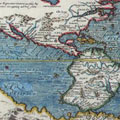
Africa

I

THE WAY THERE

There are countless Arab tales of evil Djinns who take the form of sandstorms and hot winds to overwhelm exhausted travellers.

I

THE CROWD IN THE STREET

To occidental travellers the most vivid impression produced by a first contact with the Near East is the surprise of being in a country where the human element increases instead of diminishing the delight of the eye.

I

It is not too much to say that General Lyautey has twice saved Morocco from destruction: once in 1912, when the inertia and double-dealing of Abd-el-Hafid abandoned the country to the rebellious tribes who had attacked him in Fez, and the second time in August, 1914, when Germany declared war on France.

"May 1. - The camp is beginning to look civilized. Already the underwood has been cleared, and the large trees which border the river have their separate proprietors. There is no home like a shady tree in a tropical climate; here we are fortunate in having the finest mimosas, which form a cool screen. I have apportioned the largest trees among the higher officers. The English quarter of the camp is already arranged, and the whole force is under canvas. A few days ago this was a wilderness; now there are some hundred new tents arranged in perfectly straight rows so as to form streets.

For some days past, Kabba Rega had frequently sent his interpreters with messages, that he wished to sell the ivory which he had collected for the government. We had noticed on several occasions many people laden with large elephants' tusks, who invariably marched towards the same direction. The dragoman, Kadji-Barri, daily brought ivory for sale for the account of his master; and exchanged tusks for all kinds of trifles, such as porcelain cups and saucers, small musical boxes,

I had long since determined to explore the sudd, or obstructions of the main Nile, in the hope of discovering some new passage which the stream might have forced through the vegetation. A Shillook, named Abdullah, closely connected with Quat Kare, had promised to accompany me, and to supply the necessary guides. The river was full - thus I started on 11th August, 1870.

On the morning of the 14th of June, 1872, at 9.30, the advance-guard filed along the gravel path, and halted at the extremity of the station at Masindi. The line was complete, according to the orders for the march. Not a word was spoken. A light, drizzling rain fell, and the sky was a dull grey.

December 11. - The first division of the fleet, composed of eight vessels, had started, according to my previous arrangement, on 1st inst. Every third or fourth day another division followed the advance, until on the 11th I brought up the rear, and completed the departure with twenty-six vessels, including the No. 10 steamer and my diahbeeah. The wind was fair from the north.

MY losses from the 8th June to the 24th had been ten killed and eleven wounded. Every officer and soldier had thoroughly done his duty, having displayed admirable coolness and courage upon many trying occasions. None but black troops could have endured the march of about eighty miles with heavy weights upon their heads, in addition to their usual accoutrements.

I at once set to work to build a new station, and with the old wood that had formed the fence of Suleiman's zareeba, I commenced a defensive arrangement.

After the usual voyage upon the White Nile, during which we passed the Bohr and the Shir tribes, and had excellent sport in antelope shooting when the steamer stopped at forests to cut fuel, we arrived opposite the old mission station at Gondokoro on April 15, 1871.

Syndicate content