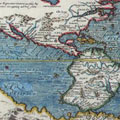
United States

The journey from San Francisco to Chicago, once the fruit country is passed, is drearily tedious, and I was never so tired of a train.

Once the lay-out of New York has been mastered - its avenues and numbered cross streets - it is the most difficult city in the world in which to lose one's way. But Boston is different. I found Boston hard to learn, although it was a pleasant task to acquire knowledge, for I was led into some of the quietest little Georgian streets I have ever been in, steep though some of them were, and along one of the fairest of green walks - that between the back of Beacon Street and the placid Charles.

One of my best Indian days was that on which Colonel Sir Umar Hayat Khan took us out a-hawking. Sir Umar is himself something of a hawk - an impressive figure in his great turban with long streamers, his keen aquiline features and blackest of hair. All sport comes naturally to him, whether hunting or shooting, pig-sticking, coursing or falconry; and the Great War found him with a sportsman's eagerness to rush into the fray, where he distinguished himself notably.

In spite of Kyoto's eight hundred temples I could not get any but a materialistic concept of its inhabitants; and elsewhere this impression was emphasised. A stranger cannot, of course, know; he can but record his feelings, without claiming any authority for them. But I am sure I was never in a country where I perceived fewer indications of any spiritual life. Every one is busy; every one seems to be happy or at any rate not discontented; every one chatters and laughs and is, one feels, a fatalist. Sufficient unto the day!

In Chicago the weather was wet and cold, and it was not until after I had left that I learned of the presence there of certain literary collections which I may now perhaps never see. But I spent much time in the Museum, where there is one of the finest Hobbemas in the world, and where two such different creative artists as Claude Monet and Josiah Wedgwood are especially honoured.

I was fortunate in the city over which William Penn, in giant effigy, keeps watch and ward, in having as guide, philosopher and friend Mr. A. Edward Newton, the Johnsonian, and the author of one of the best examples of "amateur" literature that I know - "The Amenities of Book- Collecting." Mr. Newton took me everywhere, even to the little seventeenth-century Swedish church, which architecturally may be described as the antipodes of Philadelphia's newer glory, the Curtis Building, where editors are lodged like kings and can be attained to (if at all) only through marble halls.

  Don Andres Pico 
  A Californian returning from the wars 
  Domestic life at a rancho 
  Women in favour of peace 
  Hospitable treatment 
  Fandango 

  Capt. Dupont 
  Gen. Kearny 
  The presidio 
  Appointed Alcalde 
  Gen. Kearny's proclamation 
  Arrival of Col. Stevenson's regiment 

  First settlement of the missionaries 
  Population 
  Characteristics of white population 
  Employments 
  Pleasures and amusements 
  Position of women 

A Description of Its Soil, Climate, Productions, and Gold Mines; with the Best Routes and Latest Information for Intending Emigrants. To which is annexed, an Appendix Containing official documents and letters authenticating the accounts of the quantities of gold found, with its actual value ascertained by chemical assay. Also late communications containing accounts of the highest interest and importance from the gold districts.

by Edwin Bryan

1849

Syndicate content