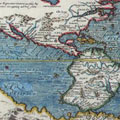
South America

One day in 1908, when my presidential term was coming to a close, Father Zahm, a priest whom I knew, came in to call on me. Father Zahm and I had been cronies for some time, because we were both of us fond of Dante and of history and of science - I had always commended to theologians his book, "Evolution and Dogma." He was an Ohio boy, and his early schooling had been obtained in old-time American fashion in a little log school; where, by the way, one of the other boys was Januarius Aloysius MacGahan, afterward the famous war correspondent and friend of Skobeloff.

On the afternoon of December 9 we left the attractive and picturesque city of Asuncion to ascend the Paraguay. With generous courtesy the Paraguayan Government had put at my disposal the gunboat-yacht of the President himself, a most comfortable river steamer, and so the opening days of our trip were pleasant in every way. The food was good, our quarters were clean, we slept well, below or on deck, usually without our mosquito-nettings, and in daytime the deck was pleasant under the awnings.

The morning after our arrival at Corumba I asked Colonel Rondon to inspect our outfit; for his experience of what is necessary in tropical travelling has been gained through a quarter of a century of arduous exploration in the wilderness. It was Fiala who had assembled our food-tents, cooking-utensils, and supplies of all kinds, and he and Sigg, during their stay in Corumba, had been putting everything in shape for our start.

At Corumba our entire party, and all their belongings, came aboard our good little river boat, the Nyoac. Christmas Day saw us making our way steadily up-stream against the strong current, and between the green and beautiful banks of the upper Paraguay. The shallow little steamer was jammed with men, dogs, rifles, partially cured skins, boxes of provisions, ammunition, tools, and photographic supplies, bags containing tents, cots, bedding, and clothes, saddles, hammocks, and the other necessaries for a trip through the "great wilderness," the "Matto Grosso" of western Brazil.

After leaving Caceres we went up the Sepotuba, which in the local Indian dialect means River of Tapirs. This river is only navigable for boats of size when the water is high. It is a swift, fairly clear stream, rushing down from the Plan Alto, the high uplands, through the tropical lowland forest. On the right hand, or western bank, and here and there on the left bank, the forest is broken by natural pastures and meadows, and at one of these places, known as Porto Campo, sixty or seventy miles above the mouth, there is a good-sized cattle-ranch.

On February 27, 1914, shortly after midday, we started down the River of Doubt into the unknown. We were quite uncertain whether after a week we should find ourselves in the Gy-Parana, or after six weeks in the Madeira, or after three months we knew not where. That was why the river was rightly christened the Duvida.

BEING AN ACCOUNT OF MANY WANDERINGS IN SOUTH AMERICA

by G. Whitfield Ray

Adventures In Remote Parts Of The Upper Amazon River, Including A Sojourn Among Cannibal Indians

by Algot Lange

by Hiram Bingham

1922

Something hidden. Go and find it. Go and look behind the Ranges - Something lost behind the Ranges. Lost and waiting for you. Go!" Kipling: "The Explorer"

Syndicate content