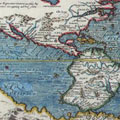
South America

It was our good fortune while in Rio to be received by the President of the Republic, Dr. Nilo Pecanha. Missionaries Shepard, Langston and Ginsburg and Dr. Nogueira Paranagua escorted me. When we started I suggested that we take a street car. Not so those Brazilians! We must go in an automobile. We were very careful to wear our Prince Albert coats, too; for, above all things, the Brazilian is a master in punctilious ceremonies. We were ushered into the waiting room by a doorkeeper, a finely-liveried mulatto with a large chain around his shoulders to indicate his authority.

When I went to South America I decided that I would spend little time upon the material aspects of the trip, but would, on the other hand, attempt to arrive at an understanding of the religious conditions and needs of the people. I consider that the religious needs are the abiding and vital interests of any people.

What is the real religion of the Brazilians? It is more a saint worship than anything else. Saint worship is at its core. Mary is the chief saint. All prayers are made to her. She is the intercessor. The Litany is all addressed to Mary. It runs, "Oh Mary, hear us, etc." She is worshiped under different aspects - Mary of the Sailors, Mary of the Conception, Mary of the Candles, Mary of the Rosary, ad infinitum. Even Christ is worshiped as a saint. The patron saint of Campos, for instance, is called Sao Salvador (St. Savior). The city of Bahia is called Sao Salvador.

Confession and penance play a large part in the religious life of the common people. The priests exercise great ingenuity to preserve the confessional. The better educated classes have long ago deserted the confessional, but it still holds sway over the common people and hangs like a dark shadow over the immoral deeds of the priests. Along with it flourishes the performance of penance. These two hand-maidens in wrong-doing often thrive in an absurd way.

It is often claimed that the progress of the gospel is slower and more difficult in Catholic countries than in outright heathen lands. Such statements can be answered only by an appeal to the facts in the case. What are the facts? The Foreign Mission Board of the Southern Baptist Convention has been conducting operations in Brazil for about thirty years. It has been doing work in China for more than sixty years.

When we reached Santo Antonio de Jesus at two p. m. we found a throng at the station to meet us. They gave us a royal welcome, receiving us literally with open arms. After this hearty greeting we formed a procession and marched two and two through the streets of the city to the church. They wished us to take the lead in the procession, but we declined the honor and finally took position about the middle of the line.

After leaving Caceres we went up the Sepotuba, which in the local Indian dialect means River of Tapirs. This river is only navigable for boats of size when the water is high. It is a swift, fairly clear stream, rushing down from the Plan Alto, the high uplands, through the tropical lowland forest. On the right hand, or western bank, and here and there on the left bank, the forest is broken by natural pastures and meadows, and at one of these places, known as Porto Campo, sixty or seventy miles above the mouth, there is a good-sized cattle-ranch.

On February 27, 1914, shortly after midday, we started down the River of Doubt into the unknown. We were quite uncertain whether after a week we should find ourselves in the Gy-Parana, or after six weeks in the Madeira, or after three months we knew not where. That was why the river was rightly christened the Duvida.

Portions of South America are now entering on a career of great social and industrial development. Much remains to be known, so far as the outside world is concerned, of the social and industrial condition in the long-settled interior regions. More remains to be done, in the way of pioneer exploring and of scientific work, in the great stretches of virgin wilderness.

South America includes so many different kinds of country that it is impossible to devise a scheme of equipment which shall suit all. A hunting-trip in the pantanals, in the swamp country of the upper Paraguay, offers a simple problem. An exploring trip through an unknown tropical forest region, even if the work is chiefly done by river, offers a very difficult problem. All that I can pretend to do is to give a few hints as the results of our own experience.

Syndicate content