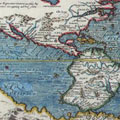
South America

One of the most fascinating phases of mission study is the tracing of the lines along which the gospel spreads. This is true because it brings us into touch with the native Christian who is one of the greatest agencies for the spread of the gospel. As it was in the first century, so it is now - "they that were scattered abroad went everywhere preaching the gospel." The history of those Apostolic times repeats itself in every mission land.

Some of the severest persecutions the saints have ever endured in Pernambuco broke upon this new congregation in the Ilheitas district. The houses of the believers were broken into and everything destroyed, some of the buildings were burned. The believers asked for police protection, but the police sent to protect them being under the domination of the priest, who was the political boss of that district, persecuted the believers even more than their neighbors had done.

The Bible is a mighty factor in the spread of the gospel in Brazil. In 1889 there came down to Bahia a man named Queiroz from two hundred and fifty miles in the interior. He came seeking baptism at the hands of Dr. Z. C. Taylor. It appears that some six or eight years previous to that time an agent of a Bible society had entered this man's community, preached the gospel and left behind him some copies of the Scriptures. One of these Bibles was found afterwards by Queiroz, who studied it and was impressed with its truth.

In 1894, Francisco da Silva, soon after his conversion in Bahia, went to Victoria in the State of Espirito Santo to live. He went into the interior with some surveyors, and in addition to the work he was called upon to do, he found time to tell the story of Jesus. Eight people were converted and he wrote Dr. Z. C. Taylor to come and baptize them.

In thinking of the missionary, most of us dwell upon the heroic self-denial he practices and the bravery with which he faces the gravest dangers. Certainly, the missionary in Brazil is due a good share of such appreciation. He has been called upon to endure shameful indignities, painful personal dangers and the enervating perils of a hostile climate. Our own missionaries have been beaten, stoned, thrown into streams, arrested and haled before courts, shot at and in many instances saved only by the most signal dispensations of Providence. Dr.

One day in 1908, when my presidential term was coming to a close, Father Zahm, a priest whom I knew, came in to call on me. Father Zahm and I had been cronies for some time, because we were both of us fond of Dante and of history and of science - I had always commended to theologians his book, "Evolution and Dogma." He was an Ohio boy, and his early schooling had been obtained in old-time American fashion in a little log school; where, by the way, one of the other boys was Januarius Aloysius MacGahan, afterward the famous war correspondent and friend of Skobeloff.

On the afternoon of December 9 we left the attractive and picturesque city of Asuncion to ascend the Paraguay. With generous courtesy the Paraguayan Government had put at my disposal the gunboat-yacht of the President himself, a most comfortable river steamer, and so the opening days of our trip were pleasant in every way. The food was good, our quarters were clean, we slept well, below or on deck, usually without our mosquito-nettings, and in daytime the deck was pleasant under the awnings.

The morning after our arrival at Corumba I asked Colonel Rondon to inspect our outfit; for his experience of what is necessary in tropical travelling has been gained through a quarter of a century of arduous exploration in the wilderness. It was Fiala who had assembled our food-tents, cooking-utensils, and supplies of all kinds, and he and Sigg, during their stay in Corumba, had been putting everything in shape for our start.

Syndicate content