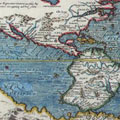
North America

Go where you may within the bounds of California, mountains are ever in sight, charming and glorifying every landscape. Yet so simple and massive is the topography of the State in general views, that the main central portion displays only one valley, and two chains of mountains which seem almost perfectly regular in trend and height: the Coast Range on the west side, the Sierra Nevada on the east. These two ranges coming together in curves on the north and south inclose a magnificent basin, with a level floor more than 400 miles long, and from 35 to 60 miles wide.

Of the small residual glaciers mentioned in the preceding chapter, I have found sixty-five in that portion of the range lying between latitude 36 deg. 30' and 39 deg. They occur singly or in small groups on the north sides of the peaks of the High Sierra, sheltered beneath broad frosty shadows, in amphitheaters of their own making, where the snow, shooting down from the surrounding heights in avalanches, is most abundant. Over two thirds of the entire number lie between latitude 37 deg. and 38 deg., and form the highest fountains of the San Joaquin, Merced, Tuolumne, and Owen's rivers.

I awoke on Friday at 2.30 A.M. The morning was clear as diamonds, and from the open front of my tent I could see the eastern sky. It glowed a deep red gold, and I lay watching it. An hour later the sun appeared over the hills touching the peak of my tent with its light, and I got up to look out. The mists had gathered on our little lake, and away in the distance hung white over the river.

Gilbert was busy getting wood and preparing the breakfast. Soon I heard him at the door of the men's tent saying, "All aboard."

"Any mosquitoes this morning, Gilbert?"

The day following no one was astir early. I think no one slept much. I could hear from the other tent the low hum of the men's voices far into the night. Mosquitoes kept me awake. About 2 A.M. I got up, lighted my candle, and killed all I could find, and after that I had a little peace, but did not sleep much. It was then growing light.

It was the sun that did it, or else it was a scheme on the part of George and Job to work in an extra pudding. However that may have been, we found ourselves on Wednesday morning not yet on Lake Michikamau, and we did not reach it until 5.15 P.M. that day.

We had not reached our haven too soon. Almost immediately the wind rose again, and by noon was blowing so strong that we could have done nothing in any part of Lake Michikamau, not to speak of crossing the upper end in a heavy south wind. Around the point I did not find things look as I expected. It was only a very shallow bay, and where we looked for the islands a long, narrow point of land stretched out from the west shore to the northeast.

Tuesday morning, August 8th, dawned clear and calm, and Gilbert came forth to light the fire, singing: "Glory, glory, hallelujah! as we go marching along." Yet before the tents were taken down the wind had sprung up from the southwest, and it was with difficulty that the canoes were launched and loaded.

The gale continued all night with passing showers, which threatened to riddle the tent with their force, and it was not till ten the following forenoon that we were able to proceed, hugging the shore as we went. Deer were about in all directions, and as we rounded a point near the head of the lake, George, standing in the bow of the canoe, and looking across to the woods beyond the big marsh, which stretched away northward, said: "The wood over there is just moving with them."

How little I had dreamed when setting out on my journey that it would prove beautiful and of such compelling interest as I had found it. I had not thought of interest - except that of getting the work done - nor of beauty. How could Labrador be beautiful? Weariness and hardship I had looked for, and weariness I had found often and anxiety, which was not yet past in spite of what had been achieved; but of hardship there had been none. Flies and mosquitoes made it uncomfortable sometimes but not to the extent of hardship.

An Account of the Exploration of the Nascaupee and George Rivers

Syndicate content