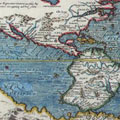
North America

The mountain winds, like the dew and rain, sunshine and snow, are measured and bestowed with love on the forests to develop their strength and beauty. However restricted the scope of other forest influences, that of the winds is universal. The snow bends and trims the upper forests every winter, the lightning strikes a single tree here and there, while avalanches mow down thousands at a swoop as a gardener trims out a bed of flowers.

The Sierra rivers are flooded every spring by the melting of the snow as regularly as the famous old Nile. They begin to rise in May, and in June high-water mark is reached. But because the melting does not go on rapidly over all the fountains, high and low, simultaneously, and the melted snow is not reinforced at this time of year by rain, the spring floods are seldom very violent or destructive. The thousand falls, however, and the cascades in the canons are then in full bloom, and sing songs from one end of the range to the other.

There was an unusual excitement and interest in Mr. Hubbard's face when he came home one evening in January of 1903.

We had just seated ourselves at the dinner-table, when leaning forward he handed me a letter to read. It contained the very pleasing information that we were shortly to receive a, for us, rather large sum of money. It was good news, but it did not quite account for Mr. Hubbard's present state of mind, and I looked up enquiringly.

"You see, Wife, it means that I can take my Labrador trip whether anyone sends me or not," he said triumphantly.

There are times when that which constitutes one's inner self seems to cease. So it was with me at the moment Mr. Ford uttered those last words. My heart should have swelled with emotion, but it did not. I cannot remember any time in my life when I had less feeling.

It was on the 15th of July, 1903, that Leonidas Hubbard, Jr., my husband, with two companions, set out from Northwest River Post, near the head of Lake Melville, for a canoe trip into the interior of Labrador, which be hoped would not only afford him an interesting wilderness experience but also an opportunity to explore and map one, and perhaps both, of these rivers, the Northwest River draining Lake Michikamau to Lake Melville, and the George River draining the northern slope of the plateau to Ungava Bay.

KEPT DURING HIS EXPEDITION INTO LABRADOR

The call "All aboard," came at about six o'clock on Thursday morning. We had breakfast, and started at 8 A.M. A cold northwest wind was blowing, and an occasional light shower fell. The sand- hills on either side of the river grew higher as we went up, with always the willows along the water edge. Miles ahead we could see Mounts Sawyer and Elizabeth rising blue and fine above the other hills, and thus standing up from the desolation of the burnt lands all about; they came as a foreword of what was awaiting us further on.

LAST DAYS TOGETHER

Friday, October 9th. - We got up good and early. Only tea we had, expecting when we got to our rapid to have something to eat. After going about 2 miles we came to our old camp where we camped on our way up where we had a goose that Mr. Hubbard had killed. I also had killed one. We went ashore to see if we could find some of the old bones. We gathered all we could find and ate them all.

Mr. Hubbard said, "I often have seen dogs eating bones and thought it was pretty hard lines for them, but it must be only fun for them."

Friday morning was warm and bright. It seemed wonderful to be having so much fine weather in Labrador, and not a fly or mosquito as yet. The one nuisance we had met was mice or lemmings. They had been busy with my hat in the night, and when I came to put it on that morning I found there was a hole eaten in the crown and a meal or two taken out of the brim. There seemed to be thousands of them, and they ran squealing about everywhere, great fat fellows, some of them as big as grey squirrels. The ground was so perforated with their holes that it reminded one of a porous plaster.

Syndicate content