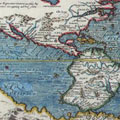
Australia

Postponement of the Exploring Expedition projected at the beginning of 1860. My Son's Letter to his Sister on going into Society. Mr. Birnie's Opinion of him, and Extract from his Lecture. Letter from William to his Mother on Religious Views and Definitions of Faith. His last Communications to his family at Home, before the Departure of the Expedition.

How the Expedition originated. Appointment of the Leader, Officers, and Party. Mr. Robert O'Hara Burke, Mr. G.J. Landells, Mr. W.J. Wills, 
   Dr. Herman Beckler, Dr. Ludwig Becker, etc. The Expedition starts from Melbourne on the 20th of August, 1860. Progress to Swan Hill. Discharge of Mr. Ferguson, the Foreman. Advance to Menindie. Resignation of Mr. Landells and Dr. Herman Beckler. Mr. Wills promoted to second in Command, and Mr. Wright to third.

From Menindie on the Darling to Torowoto. Mr. Burke's Despatch, and Mr. Wills's Report from Torowoto. Mr. Wright's unaccountable delay at Menindie. The Expedition proceeds onwards to Cooper's Creek. Exploring Trips in that Neighbourhood. Loss of Three Camels. Mr. Wills's Letter to his Sister, December 6th and 15th. Incorrectness of McDonough's Statements.

Mr. Wills's Survey of the line of Country pursued by the Expedition, from Torowoto Swamp to Cooper's Creek.

THE following reports, which were duly forwarded and published, contain interesting particulars of the country traversed, and the observations made between Torowoto and Cooper's Creek. They were accompanied by a tracing, which is shown on the map.

Camp 65, Depot, Cooper's Creek, December 15th, 1860.

SIR,

We now resume the story of Flinders' voyage along the southern coast of Australia, from the time when he made Cape Leeuwin on December 6th, 1801.

The name Australia was given to the great southern continent by Flinders. When and why he gave it that name will now be shown.

Flinders did not complete the examination of Kangaroo island. The approach of the winter season, and an apprehension that shortness of provisions might compel him to make for Port Jackson before concluding the discovery of the south coast, induced him to leave the south and west parts of the island, with the intention of making a second visit at a later time. Therefore, in the afternoon of Tuesday, April 6th, the anchor was weighed and he resumed the exploration of the mainland eastward from Cape Jervis, at the extremity of St. Vincent's Gulf.

[In a long letter of about 30,000 words, written to the French Minister of Marine from Port Jackson in 1802, Captain Baudin described his explorations in Australian waters up to that date. The manuscript is in the Archives Nationales, Paris, BB4, 995, Marine. It has never been published. In this appendix, which relates to Chapter 14 of the book, I translate the portion of the letter concerning the meeting of the Investigator and Le Geographe in Encounter Bay, with a few notes.]

Flinders' actual discovery work on the south coast was completed when he met Baudin in Encounter Bay; for the whole coast line to the east had been found a short while before he appeared upon it, though he was not aware of this fact when completing his voyage. For about a hundred and fifty miles, from the mouth of the Murray eastward to Cape Banks, the credit of discovery properly belongs to Baudin, and Flinders duly marked his name upon the chart.

Syndicate content