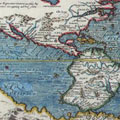
Africa

For some days past, Kabba Rega had frequently sent his interpreters with messages, that he wished to sell the ivory which he had collected for the government. We had noticed on several occasions many people laden with large elephants' tusks, who invariably marched towards the same direction. The dragoman, Kadji-Barri, daily brought ivory for sale for the account of his master; and exchanged tusks for all kinds of trifles, such as porcelain cups and saucers, small musical boxes,

"May 1. - The camp is beginning to look civilized. Already the underwood has been cleared, and the large trees which border the river have their separate proprietors. There is no home like a shady tree in a tropical climate; here we are fortunate in having the finest mimosas, which form a cool screen. I have apportioned the largest trees among the higher officers. The English quarter of the camp is already arranged, and the whole force is under canvas. A few days ago this was a wilderness; now there are some hundred new tents arranged in perfectly straight rows so as to form streets.

The day of starting at length arrived; the chief and guide appeared, and we were led to the Kafoor river, where canoes were in readiness to transport us to the south side. This was to our old quarters on the marsh. The direct course to the lake was west, and I fully expected some deception, as it was impossible to trust Kamrasi.

The sun had risen when I woke. I had slept, and, horrified as the idea flashed upon me that she must be dead, and that I had not been with her, I started up. She lay upon her bed, pale as marble, and with that calm serenity that the features assume when the cares of life no longer act upon the mind, and the body rests in death. The dreadful thought bowed me down; but as I gazed upon her in fear, her chest gently heaved, not with the convulsive throbs of fever, but naturally. She was asleep; and when at a sudden noise she opened her eyes, they were calm and clear. She was saved!

We were prisoners on the island of Patooan, as we could not procure porters at any price to remove our effects. We had lost all our riding oxen within a few days; they had succumbed to the flies, and the only animal alive was already half dead; this was the little bull that had always carried the boy Saat. It was the 8th April, and within a few days the boats upon which we depended for our return to civilization would assuredly quit Gondokoro. I offered the natives all the beads that I had (about 50 lbs.) and the whole of my baggage, if they would carry us to Shooa direct from this spot.

IT appeared that Kisoona was to be headquarters until I should have an opportunity of quitting the country for Shooa. Therefore I constructed a comfortable little hut surrounded by a courtyard strongly fenced, in which I arranged a Rakooba, or open shed, in which to sit during the hottest hours of the day.

In the history of the Nile there was a void: its Sources were a mystery. The Ancients devoted much attention to this problem; but in vain. The Emperor Nero sent an expedition under the command of two centurions, as described by Seneca. Even Roman energy failed to break the spell that guarded these secret fountains. The expedition sent by Mehemet Ali Pasha, the celebrated Viceroy of Egypt, closed a long term of unsuccessful search.

Kamrasi, thus freed from his invaders, was almost stupefied with astonishment. He immediately paid me a visit, and as he entered the courtyard he stopped to look at the flag that was gaily fluttering above him, as though it were a talisman. He inquired "why the Turks were awed by an apparent trifle." I explained that the flag was well known, and might be seen in every part of the world; wherever it was hoisted it was respected, as he had just witnessed, even at so great a distance from home and unsupported, as in Unyoro.

The primary object of geographical exploration is the opening to general intercourse such portions of the earth as may become serviceable to the human race. The explorer is the precursor of the colonist; and the colonist is the human instrument by which the great work must be constructed - that greatest and most difficult of all undertakings - the civilization of the world.

Syndicate content