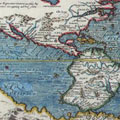
Africa

December 11. - The first division of the fleet, composed of eight vessels, had started, according to my previous arrangement, on 1st inst. Every third or fourth day another division followed the advance, until on the 11th I brought up the rear, and completed the departure with twenty-six vessels, including the No. 10 steamer and my diahbeeah. The wind was fair from the north.

MY losses from the 8th June to the 24th had been ten killed and eleven wounded. Every officer and soldier had thoroughly done his duty, having displayed admirable coolness and courage upon many trying occasions. None but black troops could have endured the march of about eighty miles with heavy weights upon their heads, in addition to their usual accoutrements.

I at once set to work to build a new station, and with the old wood that had formed the fence of Suleiman's zareeba, I commenced a defensive arrangement.

We were prisoners on the island of Patooan, as we could not procure porters at any price to remove our effects. We had lost all our riding oxen within a few days; they had succumbed to the flies, and the only animal alive was already half dead; this was the little bull that had always carried the boy Saat. It was the 8th April, and within a few days the boats upon which we depended for our return to civilization would assuredly quit Gondokoro. I offered the natives all the beads that I had (about 50 lbs.) and the whole of my baggage, if they would carry us to Shooa direct from this spot.

IT appeared that Kisoona was to be headquarters until I should have an opportunity of quitting the country for Shooa. Therefore I constructed a comfortable little hut surrounded by a courtyard strongly fenced, in which I arranged a Rakooba, or open shed, in which to sit during the hottest hours of the day.

In the history of the Nile there was a void: its Sources were a mystery. The Ancients devoted much attention to this problem; but in vain. The Emperor Nero sent an expedition under the command of two centurions, as described by Seneca. Even Roman energy failed to break the spell that guarded these secret fountains. The expedition sent by Mehemet Ali Pasha, the celebrated Viceroy of Egypt, closed a long term of unsuccessful search.

Kamrasi, thus freed from his invaders, was almost stupefied with astonishment. He immediately paid me a visit, and as he entered the courtyard he stopped to look at the flag that was gaily fluttering above him, as though it were a talisman. He inquired "why the Turks were awed by an apparent trifle." I explained that the flag was well known, and might be seen in every part of the world; wherever it was hoisted it was respected, as he had just witnessed, even at so great a distance from home and unsupported, as in Unyoro.

The primary object of geographical exploration is the opening to general intercourse such portions of the earth as may become serviceable to the human race. The explorer is the precursor of the colonist; and the colonist is the human instrument by which the great work must be constructed - that greatest and most difficult of all undertakings - the civilization of the world.

It was the middle of November - not the wretched month that chills even the recollection of Old England, but the last of the ten months of rain that causes the wonderful vegetation of the fertile soil in Equatorial Africa. The Turks were ready to return to Shooa, and I longed for the change from this brutal country to the still wilder but less bloody tribe of Madi, to the north.

In March, 1861, I commenced an expedition to discover the sources of the Nile, with the hope of meeting the East African expedition of Captains Speke and Grant, that had been sent by the English Government from the South via Zanzibar, for that object. I had not the presumption to publish my intention, as the sources of the Nile had hitherto defied all explorers, but I had inwardly determined to accomplish this difficult task or to die in the attempt.

Syndicate content